
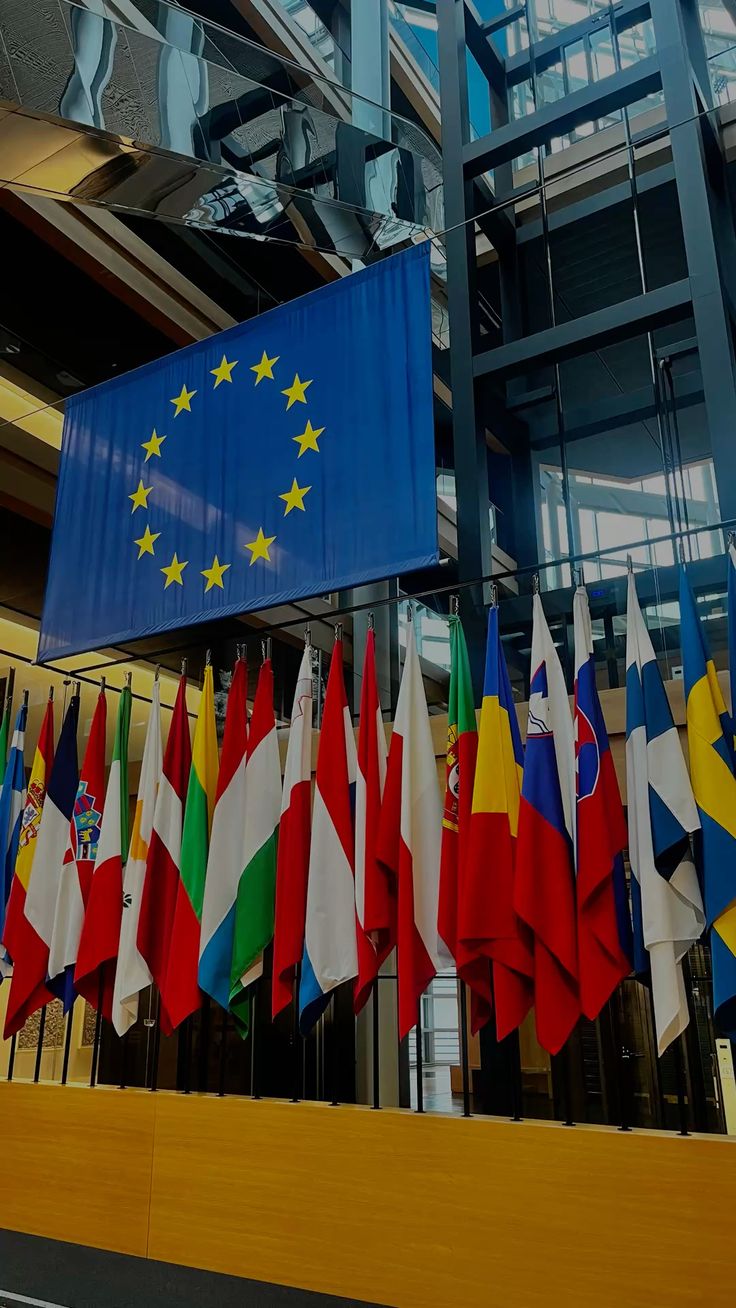
Europe is not a single market. It is a continent of 44 countries, dozens of languages, wildly different legal frameworks, and cultural attitudes toward adult content that range from fully liberal to deeply restrictive. For content creators, this complexity is both the challenge and the opportunity.
Key Takeaway: European creators must navigate three layers of regulation: EU-wide rules (DSA, GDPR, VAT OSS), country-specific content laws (Germany’s JMStV, France’s CSA enforcement), and local tax obligations that vary dramatically by country. Start with your home country’s compliance requirements, register for VAT OSS if selling directly, and treat GDPR compliance as non-optional regardless of where you’re based.
The EU provides a baseline of shared regulation through the Digital Services Act (DSA), GDPR, and the VAT One Stop Shop (OSS) system. But tax rates, content laws, payment processing, and social attitudes vary dramatically country to country. This guide breaks it all down.
What EU-Wide Regulations Must Creators Know?
Before diving into country-specific details, every European creator needs to understand three regulatory frameworks that apply across the European Union (and, in most cases, the European Economic Area).
The Digital Services Act (DSA)
The DSA, which became fully applicable in February 2024, is the EU’s landmark platform regulation. It imposes obligations on online platforms to:
- Address illegal content - Platforms must have clear mechanisms for reporting and removing illegal content, including non-consensual intimate imagery.
- Transparency in content moderation - Platforms must publish transparency reports detailing their content moderation decisions.
- Algorithmic transparency - Larger platforms must explain how their recommendation algorithms work.
- Advertising transparency - Users must be able to see why they are being shown specific advertisements.
For creators, the DSA means stricter but more transparent content moderation. Removals come with explanations and appeal mechanisms, which is generally positive.
GDPR (General Data Protection Regulation)
GDPR applies to any creator who collects personal data from EU-based fans or subscribers. Requirements include obtaining clear consent before collecting data, providing privacy notices, responding to data subject access requests within one month, implementing appropriate security measures, and reporting breaches to the relevant authority within 72 hours. If you maintain mailing lists or process any personal information from European subscribers, GDPR applies regardless of where you are based.
VAT One Stop Shop (OSS) System
The VAT OSS system simplifies VAT compliance for digital services sold across EU borders. Instead of registering for VAT in every EU country where you have customers, you can register in one EU country and report all your EU-wide digital service sales through a single quarterly return.
For most creators on established platforms, the platform itself handles VAT collection and remittance as the deemed supplier. However, creators who sell directly through their own websites, accept direct payments, or operate independent storefronts need to understand their VAT obligations.
Key points:
- No minimum threshold for the OSS - The previous 10,000 euro threshold for intra-EU distance sales of digital services determines whether you can use your home country’s VAT rate or must apply the destination country’s rate.
- VAT rates vary by country - Standard rates range from 17% (Luxembourg) to 27% (Hungary). Your compliance obligation depends on where your subscribers are located.
- Registration is in your home EU country - You file one OSS return covering all EU member states.
What Are the Major European Markets for Creators?
Germany
Germany is the largest economy in Europe and a massive potential audience for content creators. However, it has some of the strictest adult content regulations on the continent.
Tax structure: German income tax is progressive, ranging from 0% (up to approximately 11,604 euros) to 45% (above 277,826 euros). A solidarity surcharge of 5.5% applies on top of income tax for higher earners. Freelancers (Freiberufler) and self-employed individuals (Gewerbetreibende) must register with their local tax office (Finanzamt) and file annual income tax returns. Quarterly advance tax payments (Vorauszahlungen) are required once your tax liability exceeds certain thresholds.
Adult content regulations (JMStV): The Jugendmedienschutz-Staatsvertrag (Interstate Treaty on the Protection of Minors in the Media) imposes strict requirements on adult content. Platforms must implement age verification systems compliant with German standards, which are more demanding than most countries. The Kommission fur Jugendmedienschutz (KJM) actively monitors and enforces compliance. Non-compliant platforms risk being blocked at the ISP level in Germany. In fact, several adult sites have been blocked or threatened with blocking for failing to implement adequate German-standard age verification.
Platform legality: OnlyFans, Fansly, and Fanvue are accessible in Germany, but creators should be aware that German authorities have taken a more aggressive stance on platform compliance than most EU countries.
Language considerations: German-language content serves a market of approximately 100 million native speakers (Germany, Austria, and German-speaking Switzerland). Creating at least some German-language marketing materials significantly expands your addressable market within the DACH region.
VAT: Standard rate of 19%. Freelancers below 22,000 euros annual revenue can use the Kleinunternehmerregelung (small business exemption) to avoid charging VAT.
France
France has a large, digitally engaged population and a growing creator economy, but regulatory enforcement has tightened significantly since 2024.
Tax structure: French income tax is household-based (quotient familial system), with progressive rates from 0% to 45%. Auto-entrepreneur (micro-entrepreneur) status is available for creators earning below certain thresholds (77,700 euros for services in 2025), offering simplified flat-rate taxation. Social charges (cotisations sociales) of approximately 22% apply on top of income tax for self-employed individuals, making the effective tax burden one of the highest in Europe.
CSA/Arcom enforcement: The CSA (now merged into Arcom, the Autorite de regulation de la communication audiovisuelle et numerique) has actively pursued age verification enforcement against adult content platforms. In 2023 and 2024, Arcom moved to block several adult websites that failed to implement compliant age verification for French users. Creators operating in the French market should expect continued regulatory pressure on platforms.
Platform legality: All major platforms remain accessible, but the age verification landscape is evolving rapidly. French authorities have been more aggressive than most EU countries in enforcing access controls.
Language considerations: French serves approximately 300 million speakers globally. French-language content reaches audiences not just in France but across Belgium (Wallonia), Switzerland (Romandie), Luxembourg, Monaco, and Francophone Africa and Canada.
VAT: Standard rate of 20%. The auto-entrepreneur regime includes a VAT exemption below 36,800 euros in annual revenue (for services).
Spain
Spain has emerged as a significant European creator market, driven by a young, digitally engaged population and relatively relaxed attitudes toward adult content.
Tax structure: Autonomous workers (trabajadores autonomos) must register with the Agencia Tributaria and pay a monthly social security contribution (cuota de autonomos), which starts at approximately 230 euros per month under the new income-based sliding scale system introduced in 2023. Income tax (IRPF) is progressive from 19% to 47%, with regional variations (each comunidad autonoma can adjust rates).
Regulations: Spain has a generally permissive approach to adult content among adults. Age verification requirements follow EU-wide DSA standards. There is no Spain-specific adult content regulatory body equivalent to Germany’s KJM.
Platform legality: Full access to all major platforms. No platform-level restrictions specific to Spain.
Language considerations: Spanish is the second most-spoken native language in the world (approximately 500 million native speakers). Spanish-language content reaches a vast market across Spain, Latin America, and the US Hispanic population. This is one of the most significant language advantages any European creator can leverage.
VAT: Standard rate of 21%. Self-employed individuals must charge VAT and file quarterly returns (Modelo 303) and annual summaries (Modelo 390).
Italy
Italy represents a large but often overlooked creator market with specific bureaucratic and tax considerations.
Tax structure: Self-employed income is taxed under the IRPEF progressive system, with rates from 23% to 43%. Italy offers a “regime forfettario” (flat-rate regime) for self-employed individuals earning below 85,000 euros annually, with a flat 15% tax rate (reduced to 5% for the first five years of activity). This regime is exceptionally favorable for newer creators and is one of the best tax structures for early-stage creators in all of Europe.
Regulations: Italy follows EU-wide standards. AGCOM (Autorita per le Garanzie nelle Comunicazioni) oversees content regulation but has not pursued adult content platforms as aggressively as France or Germany.
Platform legality: Full access to all major platforms.
Language considerations: Italian is spoken by approximately 67 million people. The domestic market is substantial but not as internationally scalable as Spanish or French.
VAT: Standard rate of 22%. The regime forfettario includes a VAT exemption, which is a significant simplification for qualifying creators.
Netherlands
The Netherlands has long maintained one of the most liberal approaches to adult content in Europe.
Tax structure: Income tax (inkomstenbelasting) is progressive: 36.97% on income up to approximately 75,518 euros and 49.50% above that threshold (2025 rates). Self-employed individuals benefit from the zelfstandigenaftrek (self-employed deduction) of approximately 3,750 euros (being phased down) and the MKB-winstvrijstelling (SME profit exemption) of 12.7% on qualifying profits.
Regulations: The Netherlands takes a liberal approach to adult content. Dutch law permits adult content between consenting adults, and regulatory enforcement focuses on illegal content categories (exploitation, minors, non-consent) rather than legal adult material. This makes the Netherlands one of the most operationally comfortable countries for adult content creators.
Platform legality: Full, unrestricted access to all platforms.
Language considerations: While Dutch is spoken by approximately 25 million people, the Netherlands has one of the highest English proficiency rates in Europe. Dutch creators can effectively target English-speaking markets without significant language barriers.
VAT: Standard rate of 21%.
Sweden
Sweden represents a small but high-value market with some of the highest per-capita spending power in Europe.
Tax structure: Sweden has a progressive income tax system with municipal tax (kommunalskatt) averaging around 32% and a national tax of 20% on income above approximately 598,500 SEK (2025). Self-employed individuals (enskild firma) must also pay social security contributions (egenavgifter) of approximately 28.97%. The combined effective tax rate is among the highest in Europe.
Regulations: Sweden takes a liberal approach to adult content. The Swedish Media Council is advisory rather than enforcement-focused when it comes to legal adult material.
Currency: Swedish Krona (SEK). Not in the eurozone. Creators face currency conversion costs on EUR or USD payouts.
Language considerations: Swedish is spoken by approximately 10 million people, but Swedish English proficiency is among the highest in the world. Most Swedish creators produce English-language content for international markets.
Romania
Romania has become one of the most important countries in the European creator economy, particularly for adult content.
Tax structure: Romania offers one of the most favorable tax environments in the EU. Income tax is a flat 10%. Social contributions (CAS and CASS) add approximately 25% for pension and 10% for health insurance on income above certain thresholds. Self-employed individuals can operate as PFA (Persoana Fizica Autorizata) or through a micro-enterprise (SRL). The SRL micro-enterprise structure offers a 1% tax on revenue (if you have at least one employee) or 3% (without employees), making it one of the lowest effective tax rates in Europe.
Regulations: Romania follows EU-wide DSA and GDPR standards. There is no specific national regulatory body aggressively targeting adult content platforms.
Platform legality: Full access to all major platforms.
Cost of living advantage: Romania’s significantly lower cost of living compared to Western Europe means that creator earnings go much further. A monthly income that would be modest in London or Paris supports a comfortable lifestyle in Bucharest or Cluj-Napoca.
Currency: Romanian Leu (RON). Not in the eurozone. Currency conversion is a standard operational cost.
Language considerations: Romanian is spoken by approximately 24 million people. Many Romanian creators produce English-language content for international audiences, and Romania’s high English proficiency among younger demographics supports this approach.
Poland
Poland is the largest economy in Central Eastern Europe and a growing market for content creators.
Tax structure: Poland offers a flat 12% tax rate for business income up to 120,000 PLN and 32% above that threshold (general rules). Alternatively, creators can opt for a flat 19% linear tax rate regardless of income level, or the ryczalt (lump sum) taxation at rates as low as 8.5% for certain service categories. Social contributions (ZUS) are mandatory and add approximately 1,600 PLN per month (full ZUS) after the initial preferential period.
Regulations: Poland has a conservative social and political environment, but legal restrictions on adult content are primarily focused on production and distribution of illegal material (as defined by the Polish Penal Code), not on legal adult content between consenting adults. Platform access is unrestricted.
Currency: Polish Zloty (PLN). Not in the eurozone.
Language considerations: Polish is spoken by approximately 45 million people. The domestic audience is substantial but internationally limited. Most Polish creators targeting higher earnings produce English-language content.
Czech Republic
The Czech Republic has a well-established adult content industry and a generally permissive regulatory environment.
Tax structure: Income tax is a flat 15% on income up to approximately 1,935,552 CZK (48 times the average wage) and 23% above that threshold. Self-employed individuals can use expense lump sums (pausalni vydaje) of 40% to 60% of income, depending on the activity type, which reduces the administrative burden and often lowers the effective tax rate.
Regulations: The Czech Republic takes one of the most liberal approaches to adult content in Europe. Production, distribution, and consumption of legal adult content are permitted with minimal regulatory friction.
Currency: Czech Koruna (CZK). Not in the eurozone.
Language considerations: Czech is spoken by approximately 10.7 million people. Like most Central European creators, high earners typically produce English-language content.
How Does Eastern Europe Compare for Creators?
The Eastern European creator market, encompassing Romania, Czech Republic, Poland, Hungary, Bulgaria, Slovakia, Slovenia, and the Baltic states (Lithuania, Latvia, Estonia), has grown rapidly and deserves specific attention.
Cost of Living Advantage
The defining advantage for Eastern European creators is the cost of living differential. Creator earnings are determined by the global subscriber market (predominantly US and Western European subscribers), while living costs reflect local economies. A creator earning 3,000 to 5,000 euros per month in Romania, Bulgaria, or Hungary lives very comfortably by local standards while competing for the same subscriber dollars as Western peers.
Tax Optimization
Several Eastern European countries offer exceptionally favorable tax structures for self-employed individuals and micro-enterprises:
- Romania - 1% to 3% micro-enterprise tax (SRL), or 10% flat income tax (PFA)
- Bulgaria - 10% flat income tax, one of the lowest in the EU. Social contributions add approximately 30 to 33% on income up to a capped ceiling.
- Hungary - KATA simplified tax regime (with modifications since 2022) or 15% flat personal income tax plus 13% social contribution. Hungary has repeatedly changed its small business tax rules, so current rules should be verified annually.
- Estonia - 0% corporate tax on retained (undistributed) profits. If you operate through an Estonian company and reinvest earnings, you pay no corporate tax until you distribute profits. This is one of the most unique tax structures in the EU.
- Slovakia - 15% income tax rate on income up to 49,790 euros (2025), 25% above that. Flat-rate expense deductions of 60% are available for certain self-employed activities.
- Lithuania - 15% income tax on self-employed income, with a reduced 5% rate available under individual activity certificates for smaller earnings. Social contributions (VSD and PSD) apply and are roughly 19.5% combined on declared income.
- Latvia - Micro-enterprise tax of 25% on revenue (applicable for businesses under certain thresholds) or standard 20% personal income tax. Social contributions vary by structure.
Platform Access and Growth
All Eastern European EU member states have full, unrestricted access to OnlyFans, Fansly, Fanvue, and other major platforms. These markets are growing faster than Western Europe in percentage terms, driven by improving internet infrastructure, increasing smartphone penetration, and a younger demographic that is culturally comfortable with digital content creation.
What Should Creators Know About Nordic Markets?
The Nordic countries (Sweden, Norway, Denmark, Finland) share common characteristics that create a distinctive creator market profile.
High Spending, Small Markets
Nordic subscribers are among the highest-spending per capita in the world. However, the combined population of Sweden (10.5 million), Norway (5.5 million), Denmark (5.9 million), and Finland (5.6 million) is approximately 27.5 million, smaller than many single US states. Nordic creators who target only domestic audiences will hit a growth ceiling quickly. Only Finland uses the euro; Sweden, Norway, and Denmark each have their own currency, adding conversion costs.
Tax Burden
Nordic countries have among the highest tax rates in the world. Combined income tax and social contribution rates can exceed 55 to 60% at higher income levels. This makes tax planning and legitimate expense deduction critically important for Nordic creators.
- Norway - Top marginal rate of approximately 47.4% plus 11.2% self-employed social security. Norway is not an EU member but participates in the EEA.
- Denmark - Top marginal rate of approximately 55.9% (including municipal tax and top tax).
- Finland - National rate up to 44% plus municipal tax averaging 7.5%, plus YEL social contributions of 24 to 25%.
Nordic creators almost universally target English-speaking international audiences for scale. The optimal strategy treats the Nordic domestic market as supplementary rather than primary.
How Do Southern European Markets Differ?
Spain, Italy, Portugal, Greece, and Croatia represent a distinct regional profile with growing creator cultures, driven partly by high youth unemployment rates that have pushed younger demographics toward alternative income streams.
Portugal
Standard income tax rates are progressive from 14.5% to 48%, but the modified NHR regime still offers benefits for new residents. Portugal uses the euro, has full platform access, and Portuguese-language content reaches approximately 260 million speakers globally.
Greece
Greece taxes self-employed income at 9% to 44%, plus approximately 27% social contributions through EFKA. Greece uses the euro with full platform access.
Croatia
Croatia joined the eurozone in January 2023. Income tax rates are 20% on income up to 50,400 euros and 30% above that. Croatia benefits from EU platform access and a cost of living well below Western European averages.
Why Is Switzerland a Special Case for Creators?
Switzerland is not an EU member but deserves specific mention due to its unique positioning.
Tax structure: Swiss taxes are levied at federal, cantonal, and municipal levels. Federal income tax tops out at approximately 11.5%, but combined rates can push the total to 22 to 45% depending on your canton. Zug and Schwyz offer the lowest rates.
Other details: Adult content is legal between consenting adults. Switzerland uses the Swiss Franc (CHF), and all major platforms are fully accessible. Four official languages (German, French, Italian, Romansh) give Swiss creators a natural multilingual advantage.
What Should Creators Know About Ireland?
Ireland merits specific attention due to its status as the European headquarters for many major tech companies.
Tax structure: Self-employed income is taxed at 20% on income up to 42,000 euros (single person) and 40% above that. USC (Universal Social Charge) adds 0.5% to 8% depending on income, and PRSI (Pay Related Social Insurance) adds 4%. The combined effective marginal rate can exceed 50%.
Regulations: Ireland follows EU-wide standards. The Data Protection Commission (DPC) is one of the most active GDPR enforcement bodies in Europe.
Language and currency: English-speaking (a significant competitive edge within Europe), euro currency with no conversion issues.
How Should European Creators Handle Payments?
European creators deal with a complex currency landscape:
Eurozone Countries (using EUR)
Germany, France, Spain, Italy, Netherlands, Portugal, Austria, Belgium, Finland, Ireland, Greece, Slovakia, Slovenia, Estonia, Latvia, Lithuania, Croatia, Luxembourg, Malta, Cyprus.
Non-Eurozone Countries
Sweden (SEK), Norway (NOK), Denmark (DKK), Poland (PLN), Czech Republic (CZK), Romania (RON), Hungary (HUF), Switzerland (CHF), Bulgaria (BGN).
Practical guidance: Multi-currency accounts (Wise, Revolut) are essential for non-eurozone creators, offering near-interbank rates and saving 1 to 3% versus traditional banks. Eurozone creators benefit from no-conversion payouts on platforms that pay in EUR. Non-eurozone creators should factor conversion costs into financial planning.
What Growth Strategies Work in Europe?
1. Multilingual Content as a Competitive Weapon
European creators have a massive advantage that most underutilize: multilingualism. A creator who can produce or market content in two or three languages instantly multiplies their addressable market. Practical approaches include:
- Bilingual or multilingual social media profiles
- Marketing captions in multiple languages
- Offering custom content in different languages at premium pricing (scarcity drives value)
- Platform bios translated into major European languages
2. Target the US Market from Europe
The US remains the largest single subscriber market. European creators should treat the US audience as their primary target, not a secondary one. This means:
- Producing English-language content as your primary output
- Scheduling posts and engagement during US peak hours (early evening CET overlaps with US afternoon)
- Understanding US cultural preferences and holidays for content hooks
Our marketing and consulting services help European creators build cross-border promotional strategies optimized for the US market.
3. Leverage the US Visa Talent Pathway
For European creators considering relocation or extended stays in the US for business purposes, understanding the visa landscape is critical. Our US visa and talent services provide guidance on pathways available to established creators.
4. Invest in Production Quality
European creators often compete on production quality as a differentiator. Investing in proper lighting, camera equipment, audio, and editing elevates your content above the majority of the market. This investment is particularly impactful for creators from countries with lower costs, where the same dollar amount buys better equipment and studio space than it would in New York or London.
5. Build Cross-Border Collaborations
European creators can collaborate across borders with relative ease thanks to the EU’s freedom of movement (for EU citizens) and Schengen area travel. Collaboration content involving creators from different countries is inherently novel for subscribers and performs well.
6. Consider Professional Management
The operational complexity of managing a content business across multiple platforms, currencies, tax obligations, and languages scales quickly. Professional management becomes a net positive once you are earning 3,000 to 5,000 euros per month consistently.
For assistance with content protection, intellectual property enforcement, and DMCA takedowns across jurisdictions, our content protection services operate across all major platforms and European legal frameworks.
For understanding your digital footprint and online presence management, our digital awareness services provide comprehensive audits tailored to the European regulatory environment.
What Is the Country-by-Country Quick Reference?
Western Europe
- Germany - 0 to 45% income tax, 19% VAT, strict JMStV age verification, EUR, full platform access
- France - 0 to 45% income tax + 22% social charges, 20% VAT, Arcom enforcement, EUR, full platform access
- Netherlands - 36.97 to 49.50% income tax, 21% VAT, liberal regulation, EUR, full platform access
- Belgium - 25 to 50% income tax, 21% VAT, EUR, full platform access
- Austria - 0 to 55% income tax, 20% VAT, EUR, full platform access (shares German language market)
- Switzerland - 22 to 45% combined tax (varies by canton), 8.1% VAT, CHF, full platform access, not EU
- Ireland - 20 to 40% income tax + USC/PRSI, 23% VAT, EUR, English-speaking, full platform access
Southern Europe
- Spain - 19 to 47% income tax + social security, 21% VAT, EUR, liberal regulation, full platform access
- Italy - 23 to 43% income tax (or 5 to 15% regime forfettario), 22% VAT, EUR, full platform access
- Portugal - 14.5 to 48% income tax, 23% VAT, EUR, Portuguese language advantage, full platform access
- Greece - 9 to 44% income tax + 27% social contributions, 24% VAT, EUR, full platform access
- Croatia - 20 to 30% income tax, 25% VAT, EUR (joined 2023), full platform access
Nordic Europe
- Sweden - 32% municipal + 20% national (above threshold), 25% VAT, SEK, full platform access
- Norway - Up to 47.4% income tax + 11.2% social security, 25% VAT, NOK, EEA (not EU), full platform access
- Denmark - Up to 55.9% income tax, 25% VAT, DKK, full platform access
- Finland - Up to 44% national + 7.5% municipal, 25.5% VAT, EUR, full platform access
Central and Eastern Europe
- Poland - 12 to 32% (or 19% flat) income tax, 23% VAT, PLN, full platform access
- Czech Republic - 15 to 23% income tax, 21% VAT, CZK, liberal regulation, full platform access
- Romania - 10% flat income tax (or 1 to 3% micro-enterprise), 19% VAT, RON, full platform access
- Hungary - 15% income tax + 13% social contribution, 27% VAT, HUF, full platform access
- Bulgaria - 10% flat income tax, 20% VAT, BGN, full platform access
- Slovakia - 15 to 25% income tax, 20% VAT, EUR, full platform access
- Slovenia - 16 to 50% income tax, 22% VAT, EUR, full platform access
- Estonia - 0% on retained profits (corporate), 20% on distributions, 22% VAT, EUR, full platform access
- Lithuania - 5 to 15% income tax, 21% VAT, EUR, full platform access
- Latvia - 20% income tax (or 25% micro-enterprise on revenue), 21% VAT, EUR, full platform access
Final Thoughts
Europe offers content creators an extraordinary combination of advantages: a massive combined population, diverse cultural markets, strong internet infrastructure, and access to every major platform. The complexity of navigating multiple tax systems, languages, and regulatory environments is real, but creators who build structured, compliant operations are rewarded with access to one of the most lucrative subscriber pools in the world.
The creators who succeed in Europe are typically those who think beyond their own country from the start. Use your multilingual skills. Target the US and UK markets for scale. Optimize your tax structure within the legal options available in your country. Invest in production quality that competes globally. And build a content business that can adapt as regulations continue to evolve.
The EU regulatory environment is trending toward more structure and more enforcement, driven by the DSA, ongoing GDPR enforcement, and country-specific initiatives. This is not a threat to legitimate creators. It is an environment that rewards professionalism and compliance while making it harder for bad actors. Position yourself on the right side of that divide.
If you need expert guidance on building, scaling, or optimizing a content business from anywhere in Europe, reach out to our team. At Only Gems Management, we work with creators across the continent and understand the specific challenges and opportunities of every major European market.
Ready to Take Your Creator Career to the Next Level?
Only Gems Management helps creators grow, earn more, and build lasting success.
Get In Touch